Xubin Wang's Site

Welcome to my personal website, which serves as a platform for self-presentation and communication with others. Here, you can learn about my research progress in Intelligent Computing and other areas of interest. If you have any suggestions, please feel free to let me know.

About me


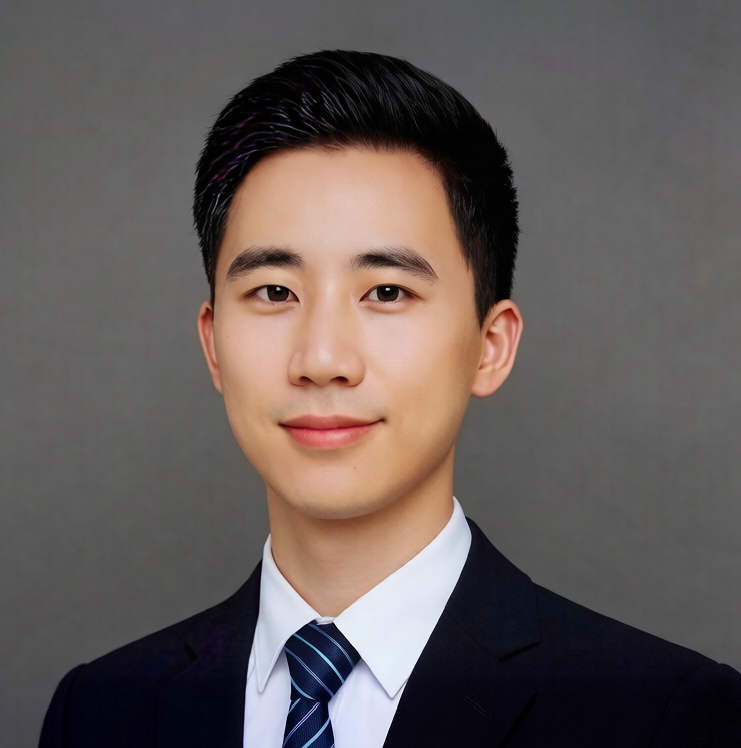
Dr. Wang's Cute Cat Avatar

Research Focus

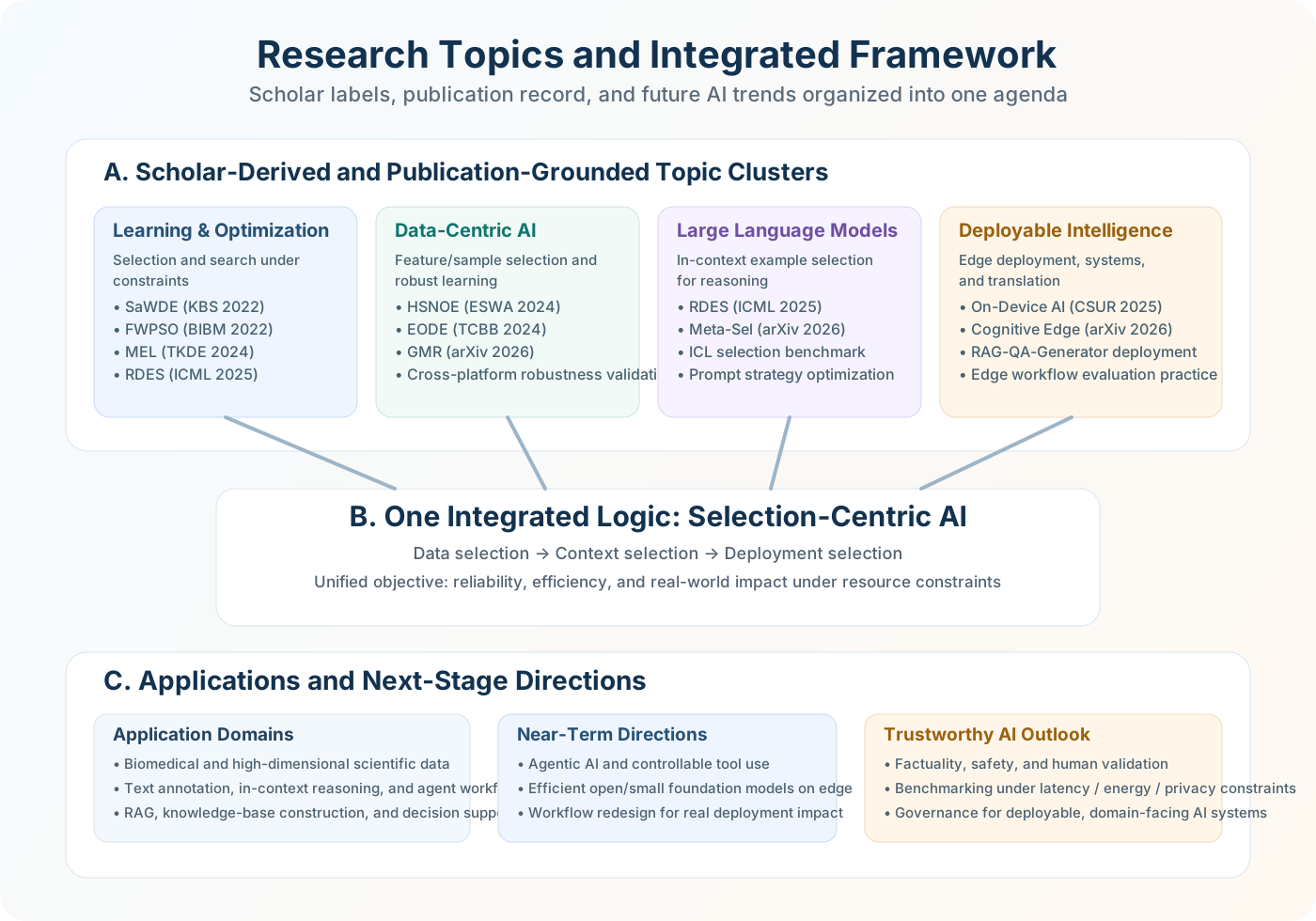
My research centers on foundation models and collaborative intelligence between large and compact models, aiming to make powerful capabilities deployable under real-world constraints (latency, memory, privacy). I explore how large models can selectively guide, distill, and adapt lightweight models through reinforcement-driven example selection, subspace feature transfer, and curriculum-style routing.

Technically, I combine evolutionary optimization, multi-task feature selection, and reinforcement learning with representation compression to enhance generalization across heterogeneous, high-dimensional biomedical and textual datasets. This includes (1) in-context demonstration selection with diversity- and reward-aware policies, (2) evolutionary multi-task feature sharing for efficient search, (3) ensemble evolutionary pipelines for cancer pathway and biomarker discovery, and (4) adaptive distillation loops where small models iteratively absorb signal from larger counterparts while preserving efficiency.

Representative work spans large model prompting & selection, evolutionary feature learning, biomedical classification & pathway modeling, and edge/on-device inference. Publications appear in venues such as ICML, TKDE, TCBB, CSUR, KBS; several results received media coverage. I am currently pursuing synergistic LLM–edge co-training, pathway-level mechanistic modeling, and reliable evaluation protocols for collaborative small–large model systems.

Contact: xubin.wang [at] kindlab.site · 欢迎合作 / Collaboration welcome.

Research Topics


  • Foundational survey landscape integrating cognitive edge computing and on-device AI under data-centric and LLM-driven evolution

    These two surveys establish complementary foundations for data-centric, resource-constrained intelligent systems. systematizes a closed-loop deployment paradigm for reasoning-capable large language models (LLMs) and autonomous agents across cloud–edge–device hierarchies. It organizes optimization layers (quantization, sparsity, low-rank adaptation, distillation), elastic collaboration (selective offloading, hierarchical routing, privacy-preserving personalization), and adaptive intelligence (context compression, dynamic agent/tool orchestration) into a cognition-preserving framework with standardized multi-axis evaluation (latency, energy/token, robustness, privacy, sustainability). In parallel, the survey characterizes design and evolution of lightweight yet capable models under stringent memory, power, and real-time constraints—covering data preprocessing pipelines, feature selection and curation, compression (quantization/pruning/distillation), hardware-aware co-design, and emerging foundation model influences.

  • Large Language Model related research

    We tackle the challenges associated with text classification tasks, particularly in few-shot prompting scenarios, by introducing the Reinforced Diverse Example Selector . RDES employs a reinforcement learning framework, specifically Q-learning and PPO, to optimize the selection of diverse reference examples, ensuring a balanced representation of data that enhances classification accuracy. Additionally, we explore the integration of Chain-of-Thought reasoning into the selection process, which further boosts the model's predictive performance. In parallel, we present the , an automated tool designed for the construction and management of knowledge bases within Retrieval-Augmented Generation (RAG) systems. This tool processes document data and utilizes large language models to generate high-quality question-answer pairs, facilitating the automated development of RAG system knowledge bases. Together, these contributions highlight the potential of advanced methodologies in addressing the complexities of text classification and knowledge management.

  • Evolutionary machine learning research framework

    Our research at the intersection of Evolutionary Machine Learning and its applications has focused on addressing prominent challenges in complex domains like feature selection, biomarker identification and cancer classification. We have proposed novel algorithms and frameworks such as for large-scale feature selection using a self-adaptive differential evolution approach, for multi-task evolutionary learning through information sharing, for efficient biomarker gene identification from microarray data via feature weighting particle swarm optimization, for ensemble-based improved cancer screening through optimized feature selection, modeling, and classification, and which leverages a hybrid sampling technique and ant colony-based feature selection within an ensemble to enhance identification of hidden responders in imbalanced biological data. Extensive experimentation demonstrates the superior and robust performance of our proposed approaches, validating their ability to provide effective solutions for challenging machine learning problems across domains while overcoming issues like local optima, dimensionality, and generalization across datasets.

Selected Publications


    Full list of publications can be found at:
  • 1
    Demonstration Selection for In-Context Learning via Reinforcement Learning
    Xubin Wang, Jianfei Wu, Yichen Yuan, Deyu Cai, Mingzhe Li, Weijia Jia
    Forty-Second International Conference on Machine Learning (ICML), 2025 CCF A
  • 2
    Empowering Edge Intelligence: A Comprehensive Survey on On-Device AI Models
    Xubin Wang, Zhiqing Tang, Jianxiong Guo, Tianhui Meng, Chenhao Wang, Tian Wang, Weijia Jia
    ACM Computing Surveys, 57(9):1-39, 2025 SCI I
  • 3
    MEL: Efficient Multi-Task Evolutionary Learning for High-Dimensional Feature Selection
    Xubin Wang, Haojiong Shangguan, Fengyi Huang, Shangrui Wu, Weijia Jia
    IEEE Transactions on Knowledge and Data Engineering, 36(08):4020-4033, 2024 CCF A
  • 4
    Exhaustive Exploitation of Nature-inspired Computation for Cancer Screening in an Ensemble Manner
    Xubin Wang, Yunhe Wang, Zhiqiang Ma, Ka-Chun Wong, Xiangtao Li
    IEEE/ACM Transactions on Computational Biology and Bioinformatics, 21(5):1366-1379, 2024 CCF B
  • 5
    Evolving Pathway Activation from Cancer Gene Expression Data using Nature-inspired Ensemble Optimization
    Xubin Wang, Yunhe Wang, Zhiqiang Ma, Ka-Chun Wong, Xiangtao Li
    Expert Systems with Applications, 248:123469, 2024 SCI I
  • 6
    A self-adaptive weighted differential evolution approach for large-scale feature selection
    Xubin Wang, Yunhe Wang, Ka-Chun Wong, Xiangtao Li
    Knowledge-Based Systems, 235:107633, 2022 SCI I
  • 7
    A Feature Weighting Particle Swarm Optimization Method to Identify Biomarker Genes
    Xubin Wang, Weijia Jia
    2022 IEEE International Conference on Bioinformatics and Biomedicine (BIBM), 830-834, 2022 CCF B

Contact


Email xubin.wang [at] kindlab.site